
Introduction to Fall Foliage in the US
As the seasons change, the US experiences a breathtaking display of fall foliage, with leaves transforming into vibrant shades of yellow, orange, and red. This natural phenomenon is a result of the breakdown of chlorophyll in plants, revealing the hidden pigments beneath. Specialized viewfinders installed in parks across Virginia are allowing guests to view the changing of leaves, despite some people’s difficulty distinguishing between hues.
The Science Behind Fall Foliage
The science behind changing leaves is rooted in a plant’s chlorophyll and photosynthesis process. During spring and summer, chlorophyll allows trees to convert sunlight into energy, but as daylight decreases and temperatures cool, chlorophyll breaks down. This helps reveal yellows, oranges, and reds that were previously masked by the dominant green pigment. The process accelerates in September, when much of the US loses between two and three minutes of daylight per day, as North America heads towards the winter solstice.
Changes in the color of vegetation were reported in Alaska in mid-August, with the Last Frontier also likely to reach peak status before any other states. 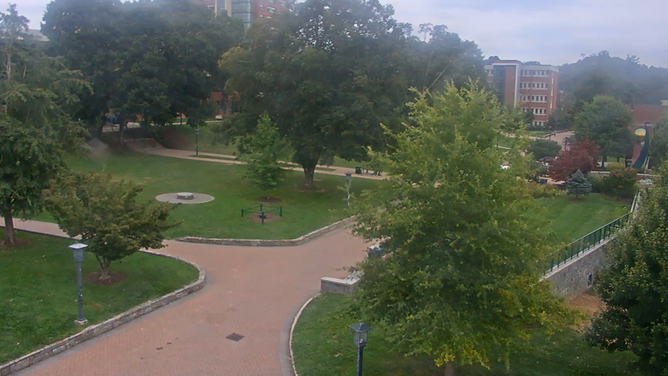
Photo from Appalachian State University in Boone, N.C. (9/6/2025)
(Appalachian State University / FOX Weather)
Tracking Fall Foliage Across the US
One of the simplest ways for leaf peepers to track the changing leaves is by following the nation’s interstate highways. Even-numbered interstates run east to west across the country and provide convenient benchmarks for when foliage typically peaks. Interstate 90, which stretches more than 3,000 miles from Seattle to Boston, is usually the first corridor where leaves change outside the mountainous regions.
Peak season along the northern tier of the country usually happens in mid-October before reaching more southern latitudes. Farther south, along Interstate 70, leaves generally begin changing by late September, with their peak around Halloween. 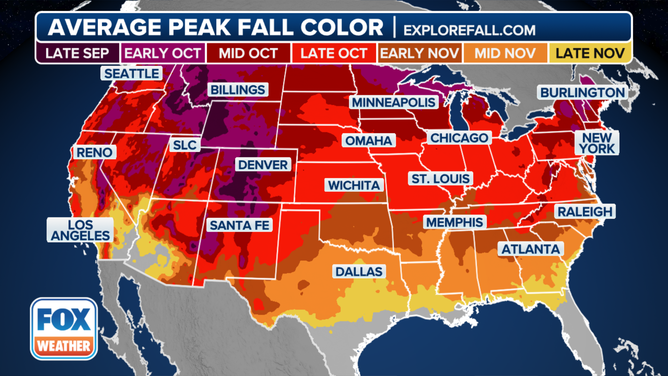
Average Peak Fall Foliage
(FOX Weather)
Factors Affecting Fall Foliage
The timing and intensity of the annual event vary by several weeks across the country, with local climate conditions playing a crucial role in determining the longevity of the season. For instance, regions that experience a lack of precipitation are likely to see more muted colors, with leaves potentially turning brown and falling prematurely.
Similarly, areas that endure a rainy and blustery fall may find their foliage season shortened, preventing leaves from reaching their full potential. Areas that aren’t dealing with drought conditions and are accustomed to sunny skies may extend their peak window longer than what is typical. 
An 84-year-old former pilot got to check an item off her bucket-list when she took the controls during a flight over the fall colors in New Hampshire.
Conclusion
As the fall season begins, the US experiences a stunning display of fall foliage, with leaves changing colors across the country. By understanding the science behind this phenomenon and tracking the changes along interstate highways, leaf peepers can enjoy the full beauty of the season. For more information on fall foliage, visit Here
Image Source: www.foxweather.com


