
Chagas disease, a potentially deadly condition caused by an infected triatomine insect or “kissing bug,” may be becoming endemic in the United States, according to a Centers for Disease Control and Prevention report. The disease is already endemic to 21 countries in the Americas, and growing evidence of the parasite is challenging the non-endemic label in the U.S.
In the report, which was originally published last month for the September issue of the CDC’s Emerging Infectious Diseases journal, the authors said that autochthonous (or, locally acquired) human cases have been reported in 8 states, most notably in Texas. Labeling the United States as non-Chagas disease-endemic perpetuates low awareness and underreporting, the report noted, adding the insect has been reported in 32 states.
Other states with human cases include California, Arizona, Tennessee, Louisiana, Missouri, Mississippi, and Arkansas, according to the report. The data is “inadequate” to prove that the insects are increasing in geographic distribution or abundance, but it also says that the bugs are “increasingly recognized” because of frequent encounters with humans and due to more research attention.
What is Chagas disease?
Chagas disease is caused by Trypanosoma cruzi parasites found in triatomine or “kissing” bugs, which can pass the disease to other animals and humans. According to UCLA Health, the insect’s nickname comes from the bug often biting people on the face. The CDC says that about 8 million people globally and 280,000 in the United States have the disease, often without knowing it.
Symptoms of Chagas disease
In the acute phase, which happens shortly after infection, a type of eyelid swelling known as Romaña’s sign may appear. This happens when the Trypanosoma cruzi parasite gets into the eyelid, usually by accidentally rubbing the bug feces into your eye or into a bug bite near your eye, the CDC says. Other acute signs may include:
- Fever
- Feeling tired
- Body aches
- Headache
- Rash
- Loss of appetite
- Diarrhea
- Vomiting
Others may experience symptoms for years or a lifetime, which is known as the chronic phase of infection, and can include heart and digestive issues. “(The disease) can destroy the nerves that feed the various parts of your body — so your heart, your esophagus, your colon,” infectious disease physician Tom Moore told CBS News Philadelphia in 2019 as cases made their way north.
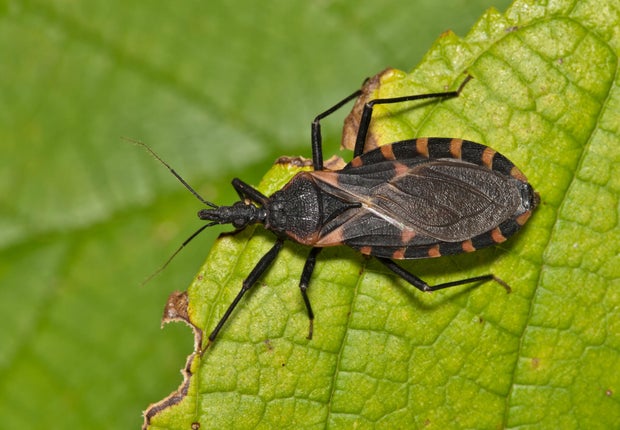
How to avoid kissing bugs
There are no vaccines or drugs that can prevent Chagas disease at this time, according to the CDC, so it’s essential to protect yourself. Prevention methods include staying in well-built places if traveling, using insecticides and bug spray, wearing clothes that cover your skin, and not eating raw fruits and vegetables, as the infection can also be acquired orally or through the mouth via contaminated food.
Experts also previously told CBS News Philadelphia that homeowners can seal windows and keep trash, piles of wood, and rocks away from their homes to reduce risk. By taking these precautions, you can minimize your chances of getting infected with Chagas disease.
Learn more about Chagas disease
For more information on Chagas disease, visit the Centers for Disease Control and Prevention website. You can also read the full report on the CDC’s Emerging Infectious Diseases journal.
This article was written by Sara Moniuszko, a health and lifestyle reporter at CBSNews.com. Previously, she wrote for USA Today, where she was selected to help launch the newspaper’s wellness vertical. She now covers breaking and trending news for CBS News‘ HealthWatch.
Read the original article Here
Image Source: www.cbsnews.com


