
La Niña Climate Pattern Takes Hold of the US: What to Expect This Winter
The La Niña climate pattern has officially taken hold of the US, bringing with it the promise of a snowy winter for some parts of the country. According to Montana State Earth Sciences Prof. Eric Sproles, who recently joined FOX Weather to discuss the phenomenon, La Niña is expected to bring more snow to the Northern Tier of the US and harsher conditions to the Northeast and New England.
La Niña is one of three climatological phases of the El Niño-Southern Oscillation (ENSO), which describe natural changes in Pacific Ocean temperatures and atmospheric circulation that can greatly influence global weather. The other two phases are El Niño, which describes warmer conditions, and ENSO neutral, which refers to a state where temperatures are close to average. WHAT ARE EL NINO AND LA NINA CLIMATE PATTERNS?
Understanding La Niña and Its Effects on US Weather
During a La Niña event, the Pacific Northwest and the Upper Midwest typically experience below-average temperatures and above-average precipitation. While these conditions do not directly predict snowfall, they are the perfect ingredients for a snowy winter.
-
next
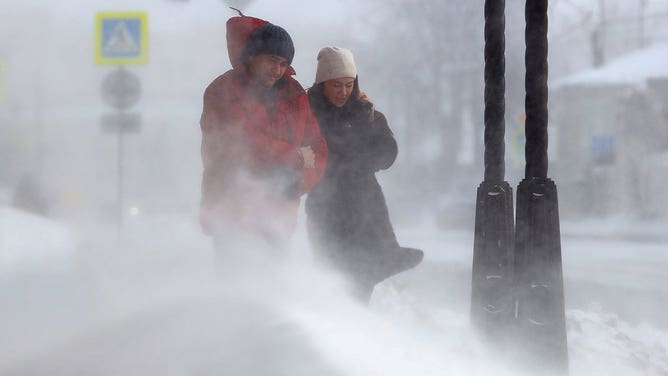
People walk in a street during a snowstorm. (Nail FattakhovTASS via Getty Images)
-
prevnext
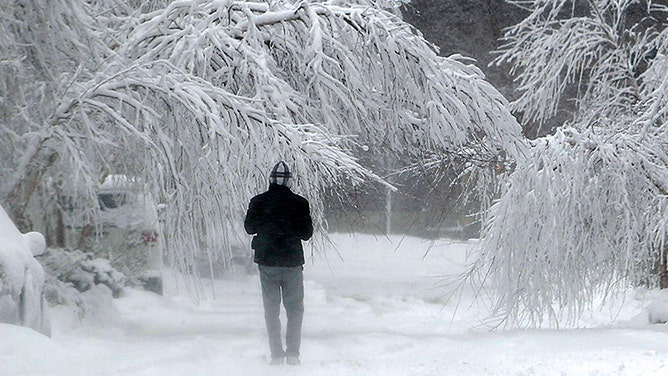
Snow-laden trees near 10th and Baltimore in Kansas City are seen, Tuesday, February 26, 2013, while the second major snowstorm hit the Kansas City metro in less than a week. (Keith Myers/Kansas City Star/Tribune News Service via Getty Images)
-
prevnext
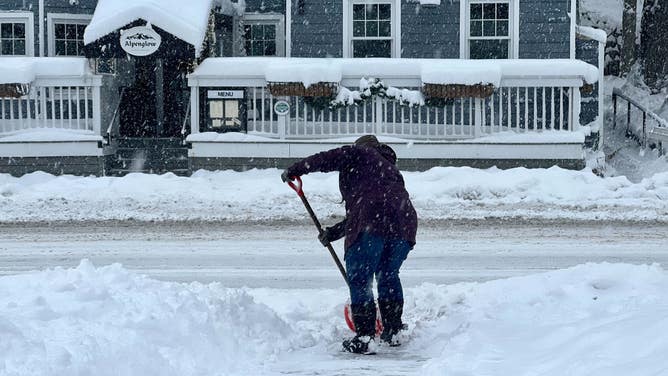
Snow falls in Wellington, Vermont on Dec. 16, 2022. ( )
-
prevnext
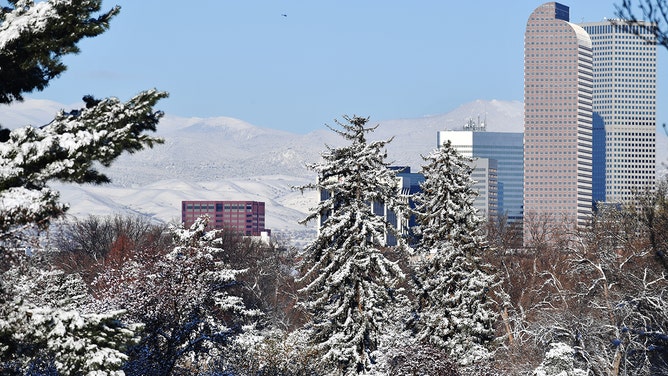
Photo taken snow covered City Park and front range at the park in Denver, Colorado on Tuesday, April 20, 2021. (Hyoung Chang/MediaNews Group/The Denver Post)
-
prevnext
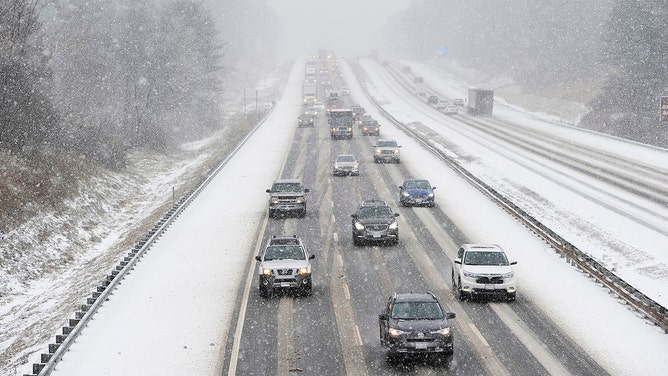
Vehicles make their way down the Maine Turnpike in Saco as the snow falls Thursday, December 29, 2016. (Shawn Patrick Ouellette/Portland Portland Press Herald)
-
prevnext
-
prevnext
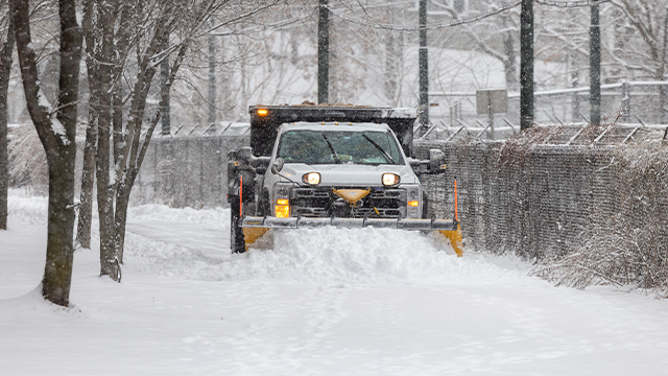
FILE – A snow plow clears a pathway from snow on February 9, 2025 in Boston, Massachusetts. (Photo by Scott Eisen/Getty Images) ( )
-
prev
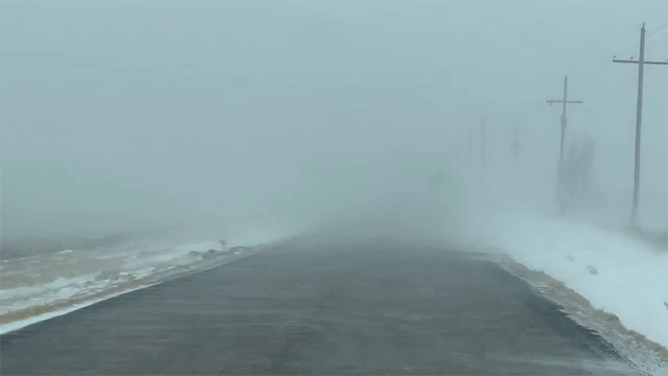
This image shows a snow squall in Amarillo, Texas, on Monday, Jan. 20, 2025. (Diana Penn via Storyful)
Winter Outlook and Snowfall Predictions
The National Oceanic and Atmospheric Administration (NOAA) has released its winter outlook, which indicates that the Pacific Northwest and the Upper Midwest will likely experience below-average temperatures and above-average precipitation. This correlates with historical trends, which show that the Northern Tier and Northwest typically see more snow during La Niña winters, while the southern part of the country stays warm and dry. 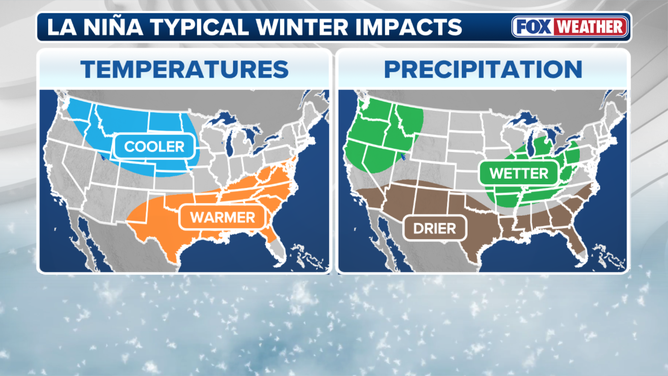
This graphic shows the impact a La Niña winter has on snow in America.
(FOX Weather)
The La Niña pattern also tends to bring more frequent Nor’easters along the Eastern Seaboard, which has already seen several coastal storms this fall. Meanwhile, measurable snow has fallen in the higher elevations in the Rockies, Cascades, and Sierra mountain ranges, as well as the mountains of the interior Northeast. Notably, North Carolina’s Mount Mitchell recorded its first snow of the season last week. 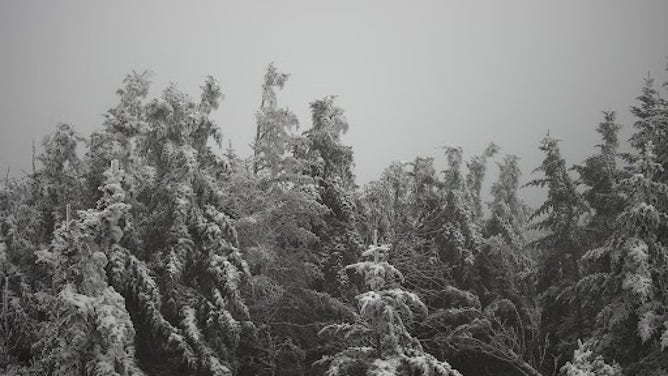
First snow of 2025-26 winter season falls atop Mt. Mitchell on North Carolina on Oct. 29, 2025.
(NWS Greenville-Spartanburg / NOAA)
According to the FOX Forecast Center, no major snowstorms are currently on the horizon for the US. However, the snowiest months for most of the country are typically January and February. NOAA has indicated that the US may shift back to ENSO neutral around the start of January, which historically has brought increased snow
Image Source: www.foxweather.com


