
Hurricane Gabrielle Updates and Tropical Disturbances
Hurricane Gabrielle is expected to make its closest approach to Bermuda later today, with the center forecast to track more than 150 miles offshore. Although the storm will cause large, dangerous swells to impact the island, winds are not expected to be dangerously strong.
The National Hurricane Center has been monitoring the situation closely, and some swells are already reaching the U.S. East Coast. Fortunately, the ocean is expected to calm down tomorrow as Gabrielle accelerates into the open ocean. The Azores Islands off Portugal will need to keep a close eye on the storm for later in the week. 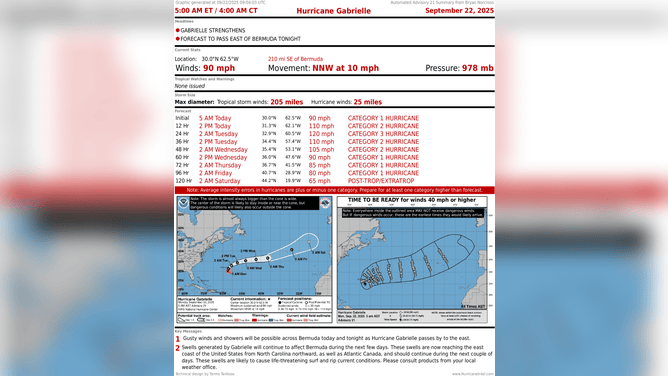
Developing Tropical Disturbances
In addition to Hurricane Gabrielle, there are several tropical disturbances that have the potential to develop into tropical depressions. The National Hurricane Center has reintroduced a disturbance that was being watched last week, now referred to as Disturbance 2. This system has a medium chance of developing into a tropical depression over the next several days. 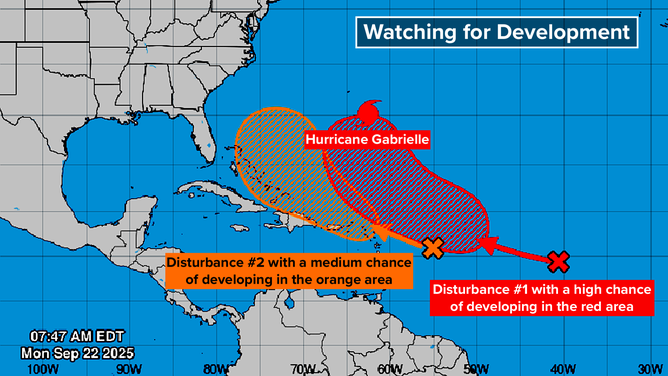
Disturbance 2 had previously disappeared from the map due to dry air obliterating its clouds and thunderstorms. However, the energy from the disturbance continued west, and thunderstorms have now redeveloped. The computer forecast models are tracking the system once again, with possibilities ranging from a significant threat to the Southeast to little if any development. 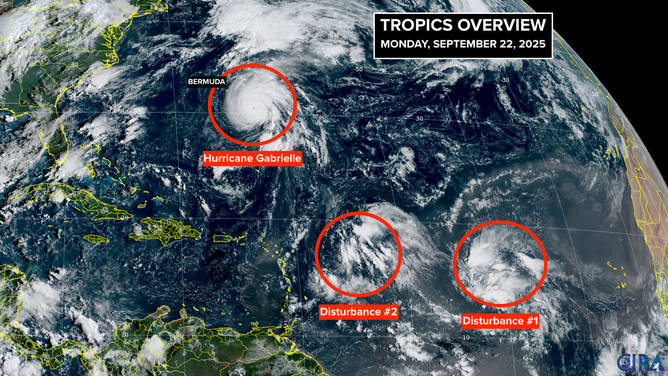
Another tropical disturbance, referred to as Disturbance 1, has a high chance of developing into a tropical depression. This system is currently embedded in dust and dry air but is likely to develop and potentially become a strong hurricane. The exclusive Tropical Threat analysis shows a high agreement among the European, U.S. GFS, and Google DeepMind AI models that Disturbance 1 will head north following Gabrielle. 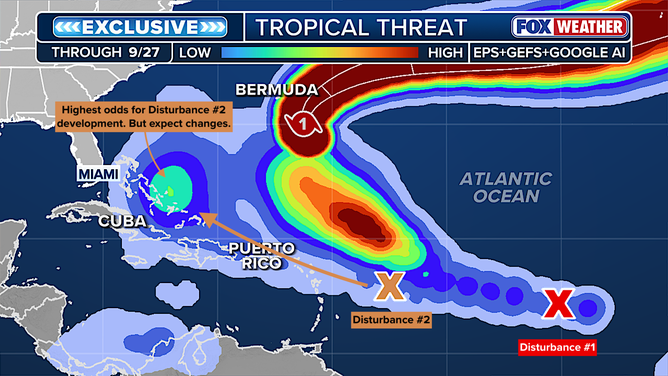
For the latest updates on Hurricane Gabrielle and the developing tropical disturbances, visit Here for the most up-to-date information and forecasts from the National Hurricane Center and other trusted sources.
Image Source: www.foxweather.com


