
Understanding the Impact of Solar Geomagnetic Storms on Human Health
The world witnessed a breathtaking display of Northern lights on May 10, 2024, as an extreme (G5) solar storm reached as far south as Florida, captivating the attention of people globally. However, beyond the visual spectacle, solar activity has been found to have potential health implications, particularly for heart attack risks, according to a study conducted by health experts in Brazil.
This phenomenon has sparked interest in understanding how solar storms, which occur after eruptions on the Sun lead to coronal mass ejections and solar flares, impact human health. While the effects on communications equipment and the triggering of Northern Lights displays are well-documented, the influence on human health, especially concerning heart attacks, remains an area of ongoing research.
Research Findings and Implications
The study, published in the journal Communications Medicine, analyzed hospital admissions between 1998 and 2005. The findings indicated a significantly higher number of heart attacks during periods of high solar activity compared to periods of less solar activity. Notably, the research suggested that women, particularly those over the age of 30, showed the greatest changes in heart attack rates during geomagnetic storms, with their rates rising disproportionately compared to men.
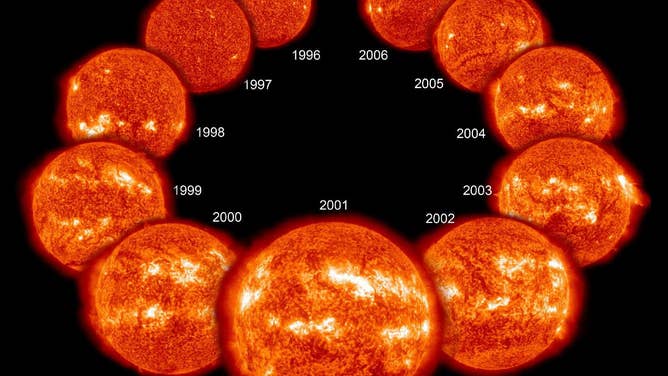
Eleven years in the life of the Sun, spanning most of solar cycle 23, as it progressed from solar minimum (upper left) to maximum conditions and back to minimum (upper right) again, seen as a collage of ten full-disk images of the lower corona.
(NASA/Goddard Space Flight Center / NASA)
Understanding Solar Cycles and Geomagnetic Activity
The study coincided with Solar Cycle 23, which began in 1996 and ended in 2008, according to NASA. This period saw several large solar flares and coronal mass ejections. The Sun is currently in Solar Cycle 25, which started in 2019 and peaked in October 2024. NASA anticipates this cycle will end around 2030, followed by a period of minimum disruptive solar activity before peaking again in the mid to late 2030s during Solar Cycle 26.
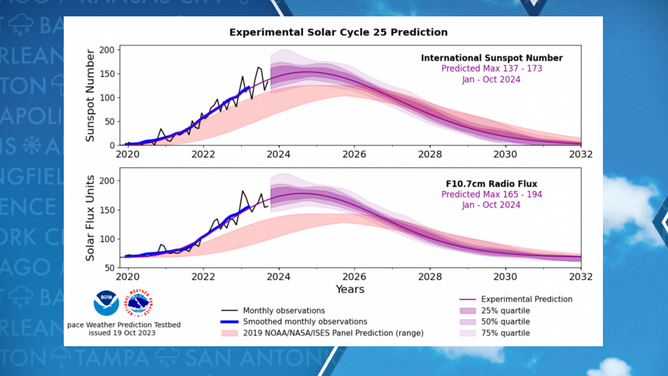
NOAA’s Space Weather Prediction Center outlook for Solar Cycle 25.
(FOX Weather)
While the study’s findings suggest a potential link between solar geomagnetic storms and increased heart attack risk, particularly among women, the authors emphasize that the results are not conclusive and should not incite alarm. Instead, they highlight the need for further research into the effects of solar activity on human health. For more information on this study and its implications, visit Here.
Image Source: www.foxweather.com


