From Misdiagnosis to Diagnosis: The Journey of Andy Provencher
When Andy Provencher crashed his mountain bike and tumbled over the handlebars, he thought his wife’s reaction would be his biggest problem. It was June 2020, and the COVID-19 pandemic was soaring nationwide, making the emergency room “the last place” his wife wanted him to be. Provencher, a father of three, had several broken bones and a punctured lung, but doctors spotted something even more alarming.
The emergency room doctor informed Provencher that his lungs were “littered with masses,” which looked like a very aggressive form of lung cancer. This startling conversation spurred a year-long search for answers, with Provencher receiving a diagnosis one day, only to have it contradicted the next. Multiple doctors thought he had terminal lung cancer, but tests and biopsies were inconclusive.
Provencher visited numerous doctors, including his primary care physician, a hematologist, a pulmonologist, and a rheumatologist, but never received a solid diagnosis. He was losing energy, struggling to walk up stairs, and aching so much that he moved “like a 90-year-old man.” Provencher was advised to begin chemotherapy, but two weeks before starting the treatment, he saw a physician’s assistant who suspected he might have a rare condition called IgG4-RD.
Understanding IgG4-RD
IgG4-RD is a rare immune condition that can cause lesions, inflammation, and scarring in “virtually any organ system,” according to Dr. Ambreesh Chawla, a rheumatologist at the Cleveland Clinic. The condition most often affects the pancreas, liver, and biliary tree, salivary glands, and lymph nodes, but can also affect the lungs, eyes, central nervous system, and more. IgG4-RD has a wide range of symptoms depending on which organs it affects and how severe it is.
Dr. John Stone, a rheumatologist and one of the premier experts on IgG4-RD, explained that the condition moves slowly and often damages organs before a patient even knows something is wrong. The condition cannot be determined from a blood test or biopsy, and doctors need to rule out other illnesses before confirming a person has IgG4-RD. Stone noted that it’s typical for a patient to wait years for a diagnosis, and an “astonishing” number of patients are misdiagnosed at first.
A New Diagnosis and Treatment
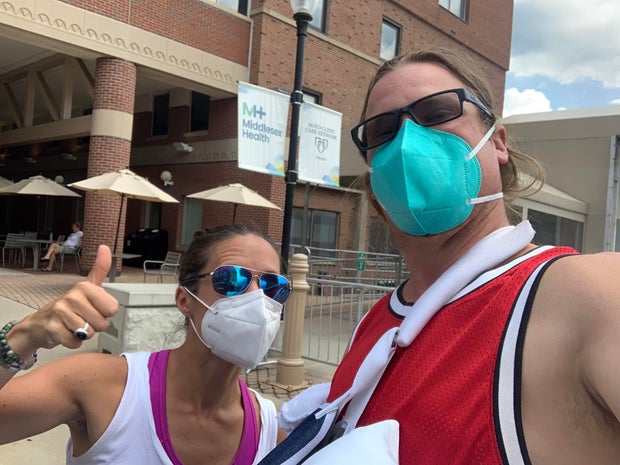
Provencher was finally diagnosed with IgG4-RD by Dr. Stone, who enrolled him in a clinical trial for a medication called inebilizumab. The trial aimed to see if inebilizumab would be effective in treating IgG4-RD. Inebilizumab is a monoclonal antibody that targets CD19, an antigen found only on the surface of the immune system’s B cells, in a process called B cell depletion.
During the year-long first phase of the trial, Provencher wasn’t sure which treatment course he was receiving, but suspected he was in the control group. In the second stage, both Provencher and Stone knew he was receiving inebilizumab, and Provencher began to see a “wonderful” improvement. Stone reported that patients who received inebilizumab had their risk of a disease flare over one year reduced by 87%, and 90% of patients who received inebilizumab were able to discontinue steroid treatment for at least one year, compared to 37% of patients who were treated with only steroids.
Life After Diagnosis
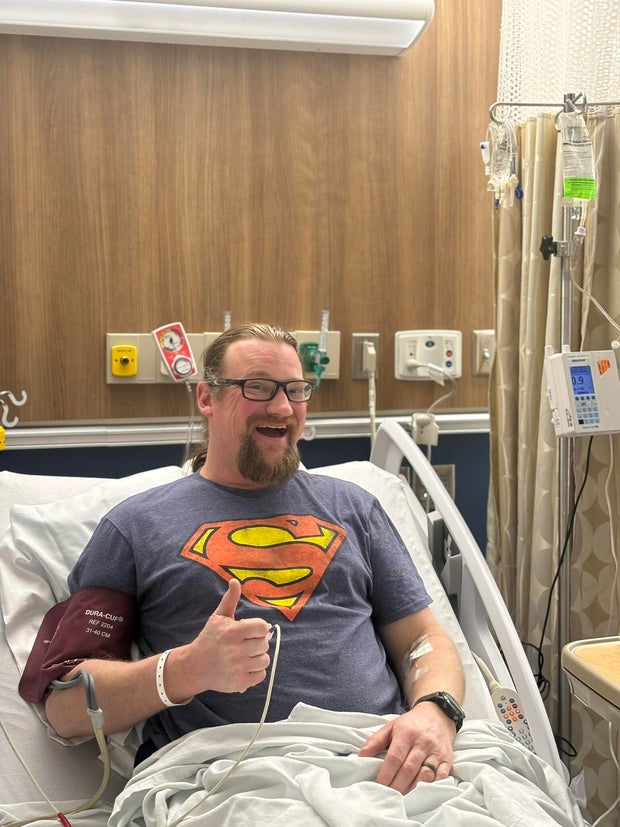
Three years after his diagnosis, Provencher is continuing to take inebilizumab and is feeling great. He has the energy to play with his kids and go out with friends. However, the damage caused before his diagnosis will last, as IgG4-RD can go into remission but has no permanent cure, according to Chawla. Provencher hopes the treatment will help him avoid a relapse and keep the disease from progressing further.
In 2023, Stone founded the IgG4ward! Foundation, which works to educate patients and connect them with resources. Stone asked Provencher’s wife, Katharine, to be its director of advocacy and community engagement. Provencher hopes that further advocacy and education about the disease can lead to a better diagnostic process.