A Life-Changing Stroke: One Man’s Journey to Recovery
Donald “Frue” McAvoy and his fiancée, Rachel Leaptrott, were enjoying a relaxing Sunday in early December 2023, making a cheese board and watching a football game. However, their tranquil afternoon took a dramatic turn when McAvoy began to choke after taking a bite. He couldn’t swallow or breathe, and his pupils became fixed in place. Leaptrott sprang into action, clearing his throat, but it soon became apparent that McAvoy was experiencing a severe medical emergency.
Leaptrott’s daughter quickly called 911, and McAvoy was rushed to the hospital. The 36-year-old gym owner had been experiencing headaches, a sore neck, and exhaustion in the days leading up to the incident, which he had attributed to a strained neck and possibly the flu. However, the reality was far more serious. Paramedics suspected a neurological issue, and doctors at the Mayo Clinic in Jacksonville, Florida, delivered a devastating diagnosis: McAvoy was having a severe stroke.
Treatment and Recovery
McAvoy underwent a thrombectomy to remove the clot and restore blood flow to his brain and spine. The procedure, performed by Dr. Rabih Tawk, a Mayo Clinic neurosurgeon, revealed a vertebral artery dissection that had caused the stroke. McAvoy’s airway had collapsed, leading to the choking incident. The road to recovery would be long and arduous, with McAvoy requiring a ventilator for seven days and breathing and feeding tubes to facilitate therapy.
Assessments indicated that the stroke had impacted all of McAvoy’s motor skills, necessitating relearning how to stand, walk, write, and speak. Leaptrott’s sole wish was for McAvoy to be able to give her a hug on Christmas Day, a goal that would drive his rehabilitation. McAvoy’s determination and the support of his care team enabled him to make remarkable progress, despite the challenges he faced, including two pulmonary embolisms.

Rehabilitation and Progress
McAvoy’s transfer to Brooks Rehabilitation Hospital marked the beginning of an intensive rehabilitation program. He was enrolled in “Brooks Boot Camp,” a personalized program involving therapists, nurses, and doctors. McAvoy’s initial goals included increasing his stamina and dressing himself, gradually progressing to more complex tasks like preparing food. He also underwent vocal therapy and consulted an eye specialist to address his vision problems.
Throughout his journey, McAvoy maintained a positive attitude, requesting extra therapy time whenever possible. He shared his story on social media, using his Instagram account to document his progress and connect with other stroke survivors. This online community became a vital source of support and motivation for McAvoy, who was determined to regain his independence.

A New Normal
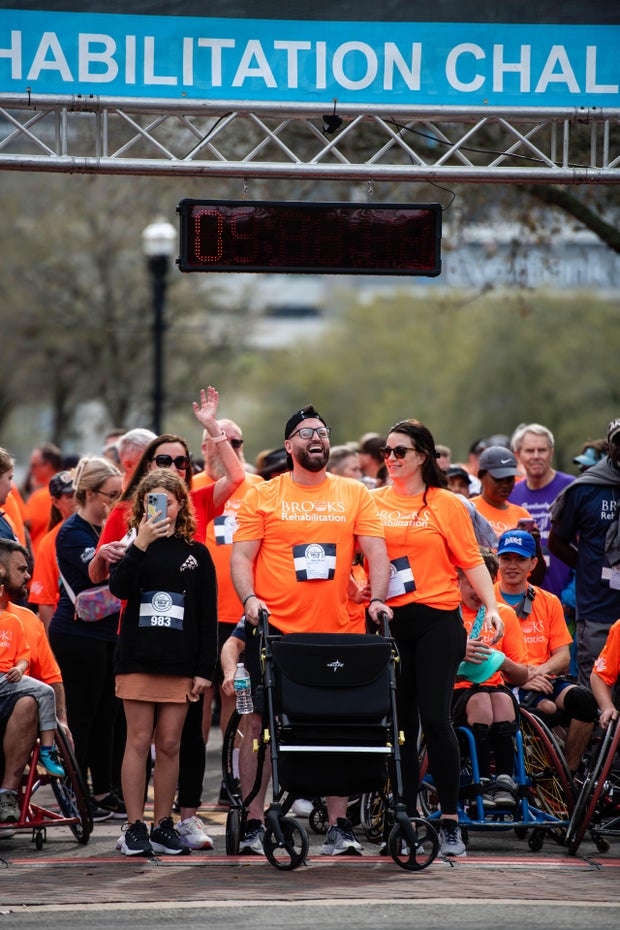
McAvoy’s discharge from Brooks Rehabilitation in late January marked a significant milestone in his recovery. Although he still struggles with the effects of the stroke, including vision problems and limited mobility, he has made tremendous progress. McAvoy uses a walker with a seat to conserve energy and wears glasses to correct his vision. Despite these challenges, he has returned to the activities he loves, including athletics, and has even participated in a one-mile challenge run.
McAvoy’s journey serves as a testament to the human spirit’s capacity for resilience and determination. His story highlights the importance of prompt medical attention, comprehensive rehabilitation, and a supportive community in overcoming the devastating effects of a stroke. For more information on stroke recovery and rehabilitation, visit Here