
The Evolution of Independent Theaters: A Story of Resilience and Creativity
Audiences have been enjoying films at movie theaters for decades, but the rise of streaming and expensive ticket prices have significantly impacted moviegoing habits. For the owners and operators of independent theaters, survival means getting creative and adapting to the changing landscape. One such example is Kevin Smith, the man behind cult classics like “Clerks” and “Mallrats,” who bought a theater in Atlantic Highlands, New Jersey, in 2022.
Smith renamed the theater Smodcastle Cinemas, hoping to rekindle the magic he had loved as a child. “I learned more about myself sitting in this (theater) than I ever did sitting in a classroom or sitting in church or something like that, and it led me to the rest of my life,” Smith said. However, the reality of operating the movie theater was difficult, even for a celebrity like Smith. Smodcastle Cinemas operates as a non-profit, as Smith stated that if they functioned as a for-profit business, they “would die.”
Alternative Models for Success
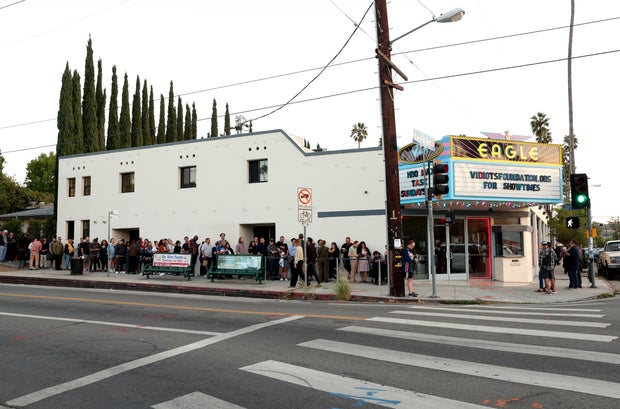
On the opposite coast, film store Vidiots has been bringing new movies to audiences for 40 years. When it opened in Santa Monica, Los Angeles, in 1985, it operated as a traditional video store with an extensive and rare collection of films. In 2023, Vidiots moved to Eagle Rock and expanded into an exhibition space, reviving the historic Eagle Theater. “We opened to uncertainty,” said executive director Maggie MacKay. “We had no idea if people would come, and they did. And they’ve been coming ever since.”
MacKay said Vidiots has become a touchstone for local kids. “One of the biggest surprises and the happiest surprises for us and the thing that I think I most wanted to happen here is that young people come here,” she said. “Teens, tweens are getting dropped off by their parents. And because this place is affordable and welcoming and nonjudgmental and safe, they are coming here all the time.”
Building a Sense of Community
New York City’s Metrograph proves that operating as a for-profit is also a viable path to success. The two-screen theater in Manhattan’s Lower East Side shows international and arthouse fare and has recently enjoyed its best summer on record. “People love going to the movies and people love the experience,” CEO Christian Grass said. The theater also has a bookstore, a magazine, a streaming service, an extravagant concession stand, and a swanky bar and restaurant.
Metrograph director of programming Inge de Leeuw said the establishment has focused on building a sense of community, which ensures people keep coming back. MacKay also emphasized the importance of creating a welcoming environment, stating that “everybody wants movies in their lives, whether they know it or realize it or not.” To save the independent theater experience, it’s crucial to make it accessible and social. As Smith noted, “You want to learn something about somebody, sit in the darkness and watch movies with them. You will learn a lot about a person.”
While independent theaters are taking different paths to success, they share a common goal: to keep introducing new and classic films to audiences. By adapting to the changing landscape and focusing on community-building, these theaters can continue to thrive. For more information on the evolution of independent theaters, visit Here
Image Source: www.cbsnews.com


