
Get Ready for the Spectacular Leonid Meteor Shower
The Leonid meteor shower is set to peak on November 17, offering a thrilling spectacle for skywatchers across North America. With the moon in its warning crescent phase, only 9% full, the viewing conditions are expected to be perfect. The meteors will be traveling at an incredible 44 miles per second, making them a sight to behold. According to NASA, the Leonids are considered one of the fastest meteors, and their brightness and color will make for a truly unforgettable experience.
The meteors will be traveling at 44 miles per second and most visible when the moon is low
What to Expect
Regarded as a major meteor shower, the Leonids can produce hundreds to thousands of meteors per hour, depending on the observer’s location. Under ideal conditions, the peak activity will occur between midnight and sunrise, with 10 to 20 meteors per hour visible during non-peak times. The Leonid meteor shower is known for its bright and colorful meteors, which are the result of pieces of dense space debris from the comet 55P/Tempel-Tuttle interacting with the Earth’s atmosphere.
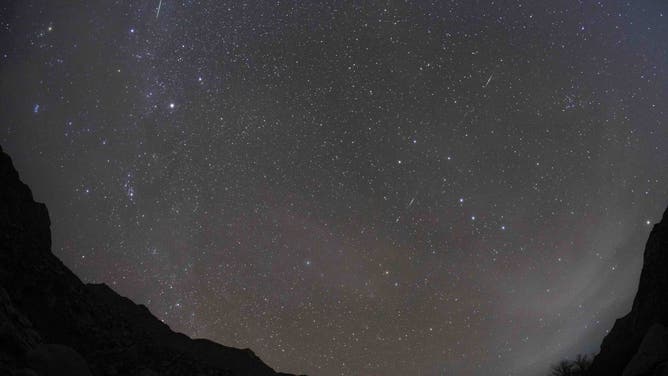
BAZHOU, CHINA – NOVEMBER 17. 2021 – Starry sky over Hora Mountain in Bayingoleng Mongolian Autonomous Prefecture, Northwest China’s Xinjiang Uygur Autonomous Region, on the early morning of November 17, 2021. On winter nights, the Leonid meteor shower is coming.
(Xue Bing / Costfoto/Future Publishing / Getty Images)
Historical Significance
The Leonid meteor shower has a rich history, with notable outbursts occurring in 1966, when thousands of meteors fell through the Earth’s atmosphere during a 15-minute period, creating a spectacular display. The last major Leonid meteor storm occurred in 2002, and according to the American Meteor Society, the Earth will not encounter any dense clouds of debris until 2099, making this year’s event a rare opportunity for skywatchers.
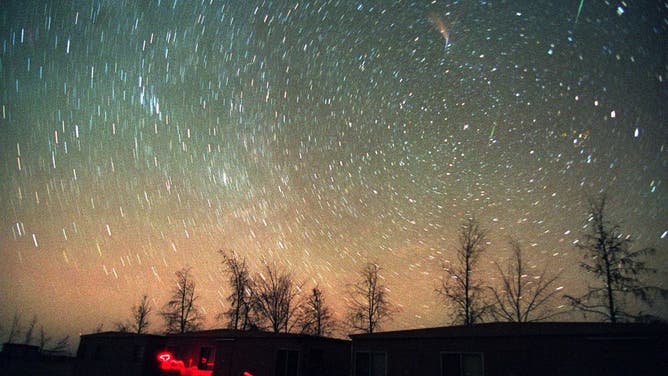
A photo from November 18, 1999 shows a Leonid meteor storm over the Azrak desert, 90km east of Amman. The storm packed up to some 1,500 meteors per hour visible with the eye. (Photo by JAMAL NASRALLAH / AFP via Getty Images)
(JAMAL NASRALLAH / AFP / Getty Images)
Viewing Tips
To make the most of this celestial event, NASA recommends finding a location far away from city lights and streetlights. Lie flat on your back, orient yourself to the east, and look up, taking in as much of the sky as possible. Allow your eyes to adapt to the dark, and you will begin to see the meteors in less than 30 minutes. For more information on the Leonid meteor shower and other celestial events, visit Here
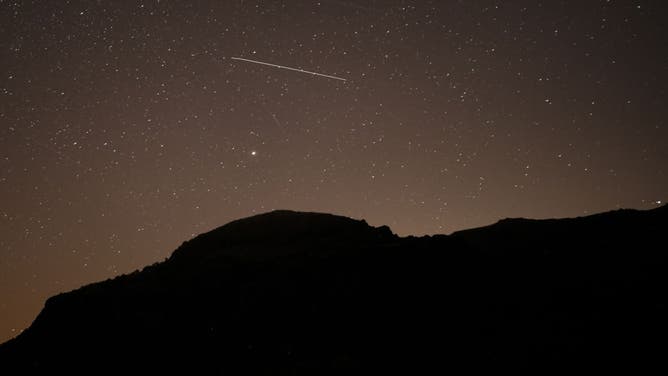
A meteor shoots across the night sky.
(Dogukan Keskinkilic / Anadolu Agency / Getty Images)
Image Source: www.foxweather.com


