
NOAA Deploys Fleet of Ocean Robots to Study Tropical Activity
The National Oceanic and Atmospheric Administration (NOAA) has launched a new initiative to improve hurricane forecasting by deploying a fleet of small, unmanned surface vehicles (USVs) in the Atlantic Ocean. The USVs, called C-Stars, are designed to collect real-time data on wind speed, direction, sea surface temperature, air temperature, and pressure, which can help scientists better understand and predict hurricane behavior.
FILE: Saildrones are unmanned surface vehicles used to collect data amid powerful hurricanes. This initiative is done to hopefully use the collected data/mapping to be used towards forecasting.
Partnership with Oshen and University of Mississippi
The C-Stars are developed by UK-based robotics company Oshen, in partnership with the University of Mississippi and NOAA. The robots are small, 4-foot-long sailboats that can operate individually or in fleets, and are equipped with satellite communication systems to transmit data back to forecasters and scientists. According to Oshen CEO Anahita Laverack, “Although C-Stars have navigated storms with towering 24-foot waves, hurricanes are a whole new level of challenge — but if it works, the long-term potential is huge.”
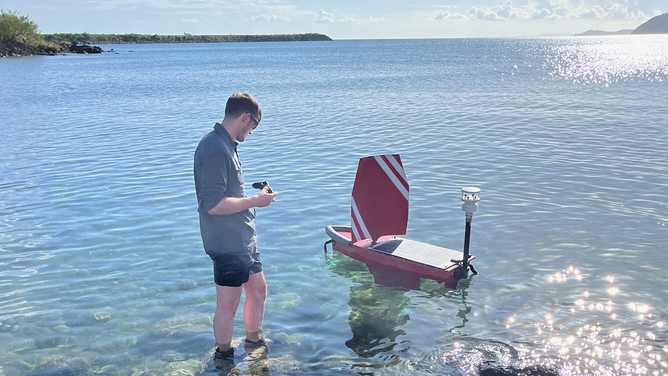
A Oshen C-Star performs its final tests near shore before being deployed.
(Oshen / NOAA)
Improving Hurricane Forecasting
The deployment of the C-Stars is part of a larger effort by NOAA to improve hurricane forecasting and understanding. The agency is using a range of systems, including partnerships with other companies and organizations, to collect weather and ocean data. The C-Stars will operate in the Atlantic Ocean until October, and will provide valuable insights into hurricane behavior and formation. As Laverack noted, “We believe that these new, small USVs can move the needle in how we observe and understand hurricanes, while keeping budgets under control.”
For more information on this initiative and the latest updates on hurricane season, visit Here
Image Source: www.foxweather.com


