
Unveiling the Secrets of Mars: NASA’s Ingenuity Helicopter and InSight Lander Reveal New Insights
Designed to be a technology demonstration that would take five flights in 30 days, NASA’s Ingenuity helicopter eventually flew more than 14 times farther and logged more than two hours of total flight time. This video shows all 72 flights on Mars, including the final flight on Jan. 18, 2024. (Video: NASA/JPL-Caltech)
Fragments left behind from massive space debris that struck Mars about 4.5 billion years ago are believed to be buried deep beneath the planet’s surface, according to new research published in the journal Science. The discovery was made possible by NASA’s retired InSight lander, which carried a highly sensitive seismometer that recorded more than 1,300 marsquakes during its four-year-long mission.
Seismic Waves Reveal Mars’ Interior
By analyzing the data, researchers found that the energy associated with seismic waves was slowed and scrambled as they passed through the planet’s mantle. According to the study, the irregularities are likely the signatures of massive fragments left behind by collisions during Mars’ violent early history. “We’ve never seen the inside of a planet in such fine detail and clarity before,” Constantinos Charalambous of Imperial College in London stated.
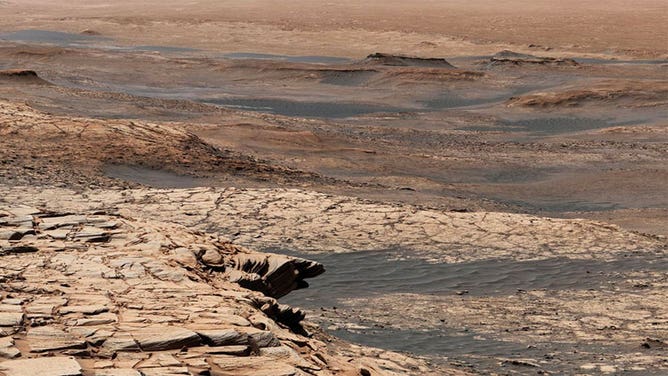
By determining how seismic waves travel through different kinds of rock, scientists were able to map out the Red Planet’s crust, mantle and core. Unlike Earth, Mars does not have tectonic plates, which means that instead of plate boundaries triggering earthquakes, shaking is primarily caused by cracking rocks and meteoroid impacts.
Mars’ Mantle and Core
Located beneath the planet’s crust, the Martian mantle can be as much as 960 miles thick and is made of solid rock that can reach temperatures as high as 2,732 degrees Fahrenheit, according to NASA. The study raises broader questions about the formation and evolution of other rocky planets in the solar system, such as Venus and Mercury.
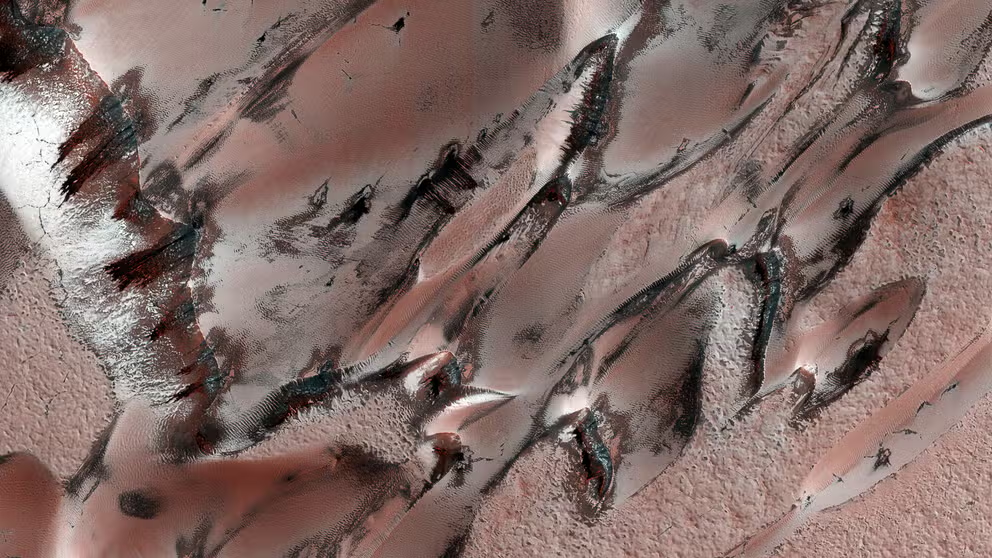
It’s not just Earth that boasts snowfall. Mars gets snow sometimes too, only there, it’s frozen carbon dioxide, not water. For more information on Mars and its fascinating features, visit Here
Image Source: www.foxweather.com


