
Hawaii’s Kīlauea Volcano Erupts for the 41st Time, Producing Spectacular Lava Fountains
Hawaii’s Kīlauea Volcano has officially erupted for the 41st time since 2024, according to the United States Geological Survey (USGS). The latest eruption occurred on Saturday, January 24, 2026, and was characterized by large lava fountains.
The eruption was witnessed by officials in Hawaii Volcanoes National Park, who reported that the lava flows steadily bubbled out of the volcano before bursting into a full-fledged fountain of at least 1500 feet.
Intermittent Glowing and Lava Flows
According to the USGS, the eruptions have since paused as of 7:29 p.m. HST on Sunday, but intermittent glowing was visible last night from the north and south vents of the volcano. Footage from the USGS shows the lava flows creating a stunning river down the mountain before quietly solidifying in the night. 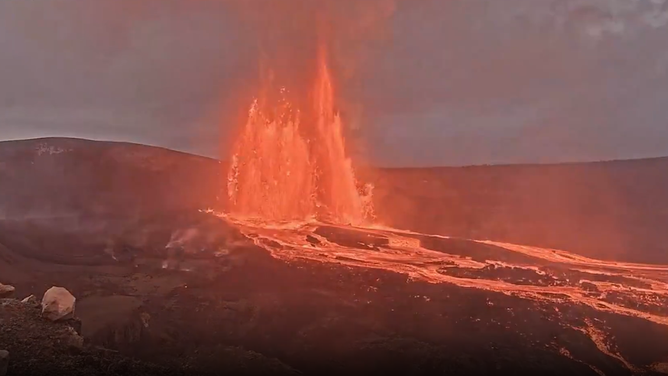
The 41st eruption of the Kīlauea Volcano in Hawaii (Jan. 24, 2026).
(U. S. Geological Survey/TMX)
Health Hazards and Environmental Impact
The lava fountains covered much of the mountain, encompassing about 80–85% of the Halemaumau crater floor. Falling ash and tephra were reported in communities as far as Hilo, posing a serious health hazard and potentially contaminating water supplies. Tephra, which refers to all fragments of rock ejected into the air by an erupting volcano, can have significant environmental impacts. 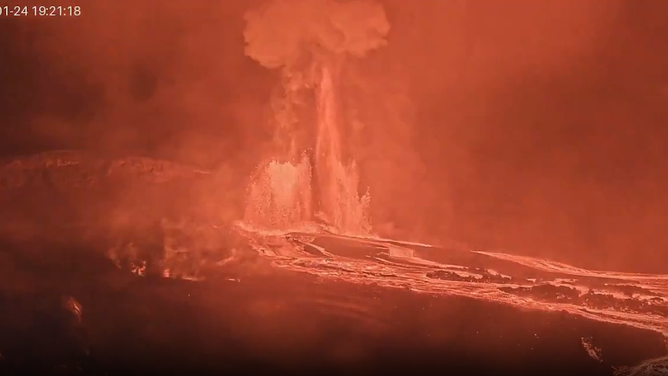
According to the USGS, Kīlauea has been erupting episodically since December 23, 2024, with each episode lasting less than 12 hours and separated by pauses that can be longer than two weeks. The next episode of the eruption is expected in about 2 to 3 weeks.
Stay Informed
For the latest updates and information on the Kīlauea Volcano eruption, visit the USGS website or follow reputable news sources. To learn more about this event, click Here
Image Source: www.foxweather.com


