
Florida Wildlife Officials Seek Help in Tracking Down Elusive Rainbow Snake
The Florida Fish and Wildlife Conservation Commission is urging residents and visitors to report sightings of the rainbow snake, a species that has been declining in population due to habitat destruction and the decline of its primary prey, the American eel.
Incredible video of a snake that drives a trip with a truck. A man in Brevard County found the snake on his windshield as he drove home from work.
Tallahassee, Fla. – The non-venomous reptile is typically found near waterways, but sightings have become increasingly rare. Biologists have found that rainbow snakes spend a large part of their lives in aquatic environments, especially in rivers, streams, and swamps.
Characteristics and Habitat of the Rainbow Snake
According to the FWC, rainbow snakes usually grow between 3 and 4 feet long and are easily recognizable due to their dazzling black or violet-blue bodies, marked with three red stripes along the back, and yellow lip and chin scales. 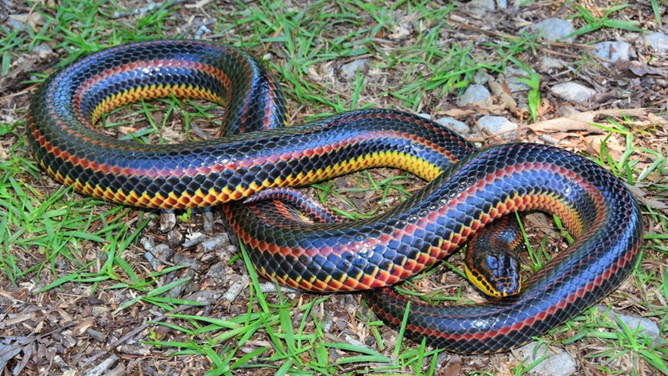
Photo of a rainbow snake
(Ryan means / Florida Museum / Fuchswetter)
Despite its obvious decline in population, the rainbow snake is not listed as an endangered species, and the agency has not provided a population estimate. In addition to habitat and food loss, officials are also monitoring the potential spread of a fungal disease that has been reported in other snake populations and could pose an additional threat.
Citizen Science Efforts to Track the Rainbow Snake
If you come across a rainbow snake, officials ask that you take a photo, note the location, and submit the sighting online. Since the agency issued the public plea, the FWC has received dozens of sightings, but only a few have been credible due to incomplete reports. 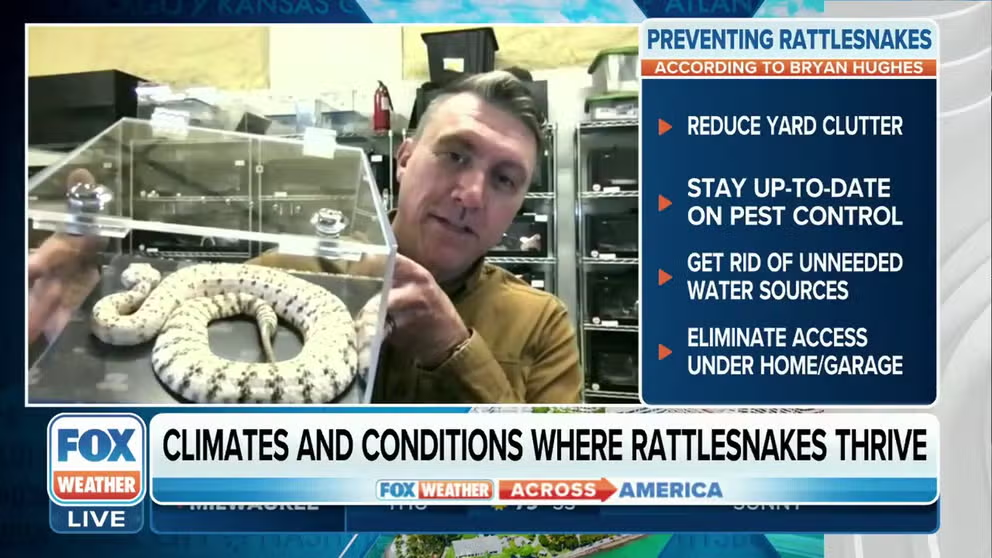
Bryan Hughes, owner of Rattlesnake Solutions, offers security tips for the rattlesching time and explains in which climate these poisonous reptiles thrive.
Each sighting report provides valuable data about the current distribution of the species and helps evaluate the health of the species in Florida. Kevin Enge, a research scientist from the FWC’s Wildlife Research Institute, emphasizes the importance of citizen science efforts in tracking the rainbow snake. “We need help from Floridians and visitors to better understand where rainbow snakes still occur in the state,” he said.
For more information on the rainbow snake and how to report sightings, visit Here
Source: www.foxweather.com


